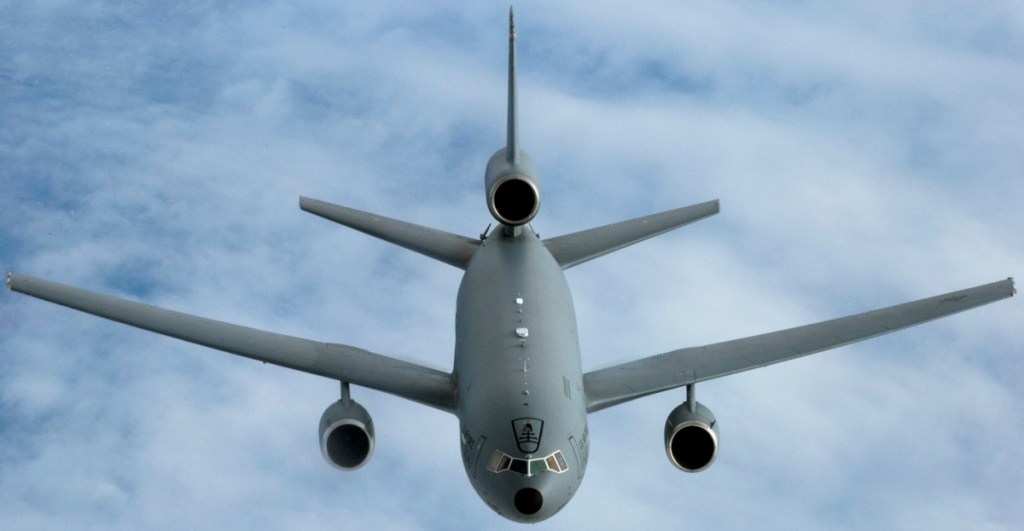
A KC-10 refueling tanker flight crew aborted takeoff at Joint Base McGuire-Dix-Lakehurst in New Jersey last month, and the Air Force is investigating why its slide-rafts failed to deploy.
There was smoke in the flight deck, which caused the crew to evacuate from the tanker on May 20, but two slide-rafts failed to inflate properly, Col. Chris Karns, Air Mobility Command spokesman, told Air Force Times in an email Monday.
This caused the crew to evacuate via a fire department truck ladder, Karns said.
The Air Force tested slide-raft deployments on other KC-10s to see if the failure was an isolated incident or something that required additional assessment. Four failed deployments occurred — two during the May 20 incident, one at Travis Air Force Base in California and a fourth on a McGuire KC-10 in depot, Karns said.
A stand-down isn’t required, however, because crews are trained on secondary egress techniques involving ropes. KC-10s have three escape ropes for such emergencies.
Air Mobility Command is working with engineers to assess the situation and find a solution, Karns said.
AMC is using preliminary risk assessment data to standardize operational procedures until a fix is delivered. This won’t disrupt the KC-10′s main mission of aerial refueling, Karns said.
However, Space-A travel has been reduced for flights on the KC-10 at Joint Base McGuire-Dix-Lakehurst and Travis Air Force Base.